
Puerco Guisado (Pork Stew) is hearty, warm, richly seasoned, and incredibly versatile. Whether you’re filling pasteles for a holiday feast, feeding a crowd on a budget, or stocking your freezer for quick weekday meals, this iconic dish delivers comfort in every bite.
As someone who learned to cook in a kitchen where love simmered for hours, I’ve always believed that good food tells a story. And Puerco Guisado—oh honey, this one sings.
Understanding the Heart of Puerco Guisado
At its core, Puerco Guisado is a dish born from resourcefulness and flavor-building tradition. Puerto Rican cooks mastered the art of layering aromatics, herbs, and spices to transform humble ingredients into meals with big personality.
From the mountainside homes of Borikén to city apartments today, this dish has remained timeless because it adapts easily and shines brightly no matter how you serve it. It’s warm. It’s filling. It’s deeply spiced without being overwhelming. And most importantly, it works equally well as a centerpiece dish or a supporting character—especially when tucked into homemade pasteles.
Ingredients That Build Bold, Layered Flavor
Essential Aromatics and Seasonings
Like many Puerto Rican stews, everything begins with sofrito. This fragrant blend of herbs, garlic, peppers, and onions creates flavor that hits you right in the memory. Add Domestic Gourmet’s scratch-made sazón and adobo, and maybe a touch of tomato sauce, and suddenly your kitchen smells like love.
Vegetable Additions for Body and Depth
Potatoes, carrots, bell peppers—each one adds texture and heartiness. These aren’t filler ingredients; they’re flavor absorbers that help the stew stretch beautifully for large families.
Choosing the Best Cut of Pork
Pork shoulder, or pork butt if that’s what your store carries, is your best friend here. It’s affordable, tender when braised, and melts into the stew like it was always meant to be there. I personally prefer bone-in since it adds more flavor but also find deboning a pain. I’ve made this with both bone-in and boneless, you really can go either way.
The Secret Behind Tender, Rich Stew
Low and slow is the name of the game. The longer it simmers, the more the pork yields to tenderness and absorbs the spices. You’re not just cooking meat, you’re coaxing out depth, personality and ancestral history.
Prefer a thicker stew for stuffing pasteles? Let it simmer uncovered a bit longer. Want it saucier to ladle over rice or grits? Hold back on the simmering uncovered. This dish bends to your needs without losing its soul. That’s one of the things I love most about making this for my family and friends.
Puerco Guisado as the Perfect Pasteles Filling
Pasteles need a filling that’s rich, savory, and cohesive, it cannot, I repeat, it cannot be watery. Puerco Guisado (Pork Stew) nails that sweet spot. The softened pork and vegetables tuck neatly inside masa, bringing bold flavor and just enough sauce to every bite.
Let’s be real, making pasteles is a labor of love. The time, energy, money and all the components that go into making them take preparation and planning. Having the filling ready a day, days or even weeks in advance? A blessing. This stew freezes beautifully, maintaining its heartiness and seasoning even after thawing.
Serving Ideas to Stretch the Dish for Large Families
Puerco Guisado With Rice
A classic for a reason. Fluffy white rice catches every bit of that savory sauce. You can feed a table of six with a little over a pound of pork thanks to this combination.
Over Grits or Harina
Here’s where comfort food takes a delicious turn. That velvety, corn base loves a good stew, and Puerco Guisado fits like it was meant to be. Think of it as a soulful marriage between Caribbean and Southern kitchens. My pro-tip to you is to substitute the water when making your grits or cornmeal with broth from the stew. You may think it might be “too much” of the “same” flavor, but just trust me on this one and then promise to come back and let me know what you think.
As a Meal Prep Staple
Because it freezes so well, it’s a dream for busy households. Package it in portions, thaw what you need, and dinner is practically done. This is one of those recipes where I like to cook once and eat twice… except sometimes that can even mean cook once and eat four times! Sometimes I double the recipe if the pork is on sale. Hello, BOGO! I’ll cook it all and freeze two additional portions feeding my family of five two more dinners. I love to have freezer meals like these for our busy nights. You can’t beat it.
Making Every Ingredient Work Twice
Pork shoulder is one of the most cost-effective proteins you can buy, offering maximum tenderness when cooked properly. A single pot of Puerco Guisado can stretch across several meals without feeling repetitive. Leftovers? Serve them over mashed potatoes, tuck them into empanadas, or spoon them over tostones. A dish that reinvents itself is always worth the pot it’s cooked in.
Puerco Guisado is an anchor dish in Puerto Rican culture, a budget-friendly solution for busy families, and a freezer-friendly workhorse that never fails to comfort. Whether served in pasteles, over rice, or spooned onto a bowl of creamy grits, this hearty classic turns any meal into a moment of togetherness.
iBuen provecho!
Please Allow Me A Moment of Gratitude
To Carl, John, and the entire Walk-In Talk Media team—thank you.
Thank you for creating space for me to share my culture, my mission, and my passion.
If you’re not already following @walkintalkmedia, now’s the time. Their platform is a love letter to the hospitality industry—featuring real stories, real chefs, and raw, unfiltered conversations that truly matter.
Find Walk-In Talk Media on:
YouTube, Apple Podcasts, Spotify, LinkedIn, Facebook, Instagram, or check out their website to learn more.
Find Ibis Images Photography on:
Instagram, LinkedIn, Facebook, or visit their website to learn more.
All products featured on Domestic Gourmet are independently selected. I may earn an affiliate commission when you buy through links on this site.
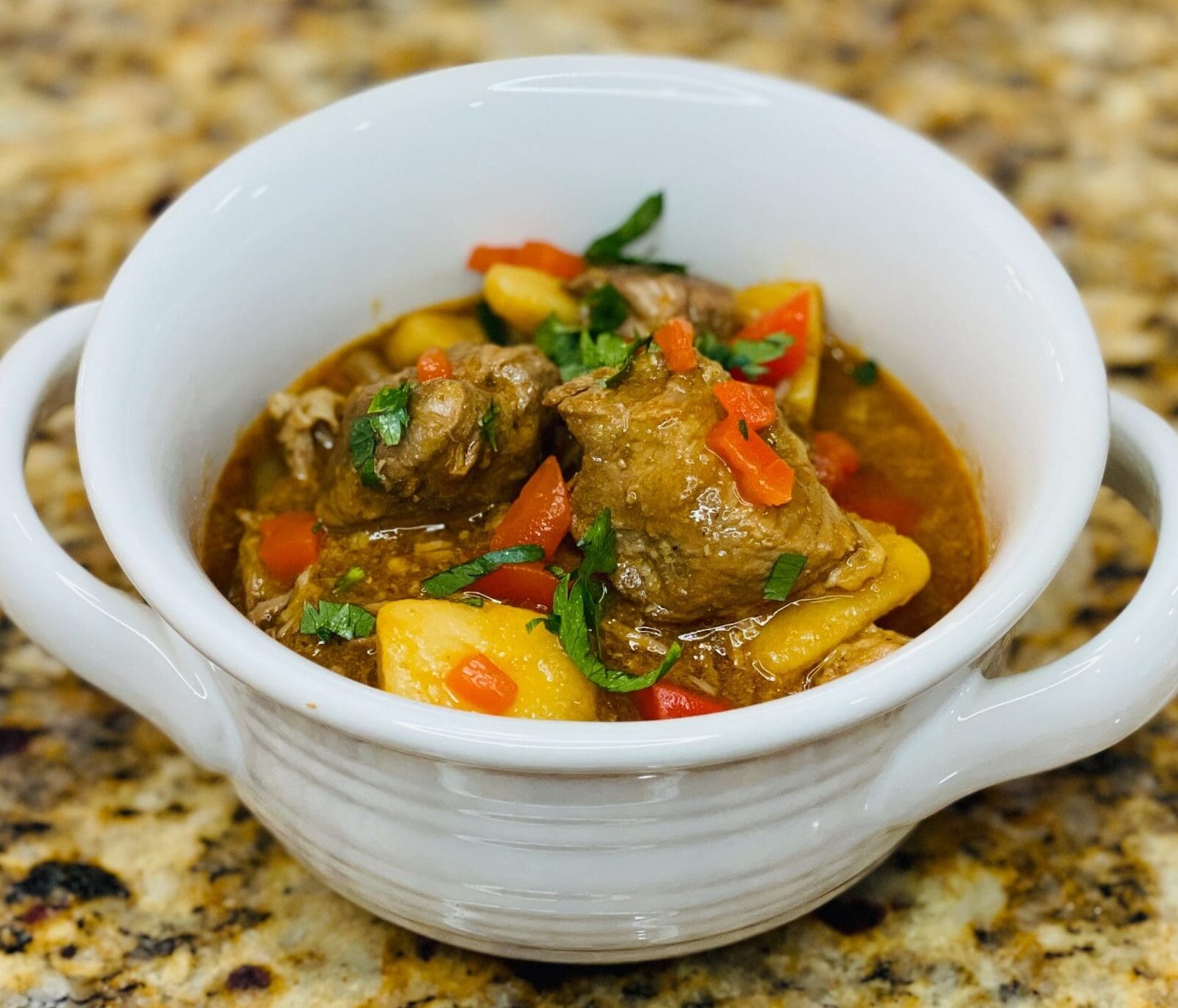
Puerco Guisado (Pork Stew)
Ingredients
- 5 lb bone-in pork butt (shoulder) can be substituted with a 3.5lb-4lb boneless pork butt, beef chuck, or chicken.
- 1 lb potatoes
- 1 lb carrots
- 2 tbsp Domestic Gourmet Organic Annatto Oil – Aceite de Achiote
- 1 tbsp Domestic Gourmet Organic Adobo
- 1 tsp Domestic Gourmet Organic Sazón
- ¼ cup dry sherry can be substituted with a dry white wine or vino seco
- ½ cup Puerto Rican Sofrito
- 4 oz tomato sauce
- 2 bay leaves
- 2-6 cups water Use 2 cups of water unless you're making pasteles, then add 6 cups of water to make extra broth.
If you don't have sofrito on hand, finely dice the following:
- ½ green pepper
- ½ Spanish onion
- 3 cloves garlic
- 2 leaves culantro
Optional:
- ¼ bunch cilantro
Instructions
- Using a chef's knife, debone the pork butt, cube the meat into 2" cubes, and place pork cubes into a large mixing bowl.
- Rinse the pork with vinegar and pat dry with paper towels.
- Season with adobo, sazon, and annatto oil, massaging the marinade into the meat.Best if seasoned the night before.
- Sear the meat in a hot pot over medium-high heat, browning each side of the cubed pork. Do this in batches to avoid overcrowding the pot. Place the seared pork on a separate plate until all of the pork has been browned.
- Once all the pork has been browned and removed, lower the heat to medium, add the wine, and using a wooden spoon, scrape the browned bits from the bottom of the pan until the liquid has reduced and all of the browned bits have been incorporated.
- Add the sofrito and saute until fragrant and softened.Add the tomato sauce and mix to incorporate.
- Add the seared pork to the pot and mix well, making sure it's evenly coated with the sofrito.
- Add 2 cups of water and two bay leaves.Raise the temperature to medium-high and bring to a boil.
- Once boiling, reduce the heat to medium-low to simmer and cover with the lid. Leave covered for 1 hour.
- When the hour is up, check the pork for tenderness. If the pork falls apart easily with a spoon, it is ready. If not, cover with the lid and check again in 30 minutes.Once tender, remove the lid halfway and add the cubed potatoes and carrots.
- Continue simmering and reduce the liquid until it thickens into a sauce, but not as thick as a gravy.Taste and adjust seasoning as needed, adding more adobo if necessary.Serve once the potatoes and carrots have softened and the stew has thickened to your liking.
Pro tip:
- Rice is the classic side dish for this recipe, but grits or harina add an irresistible Southern-Caribbean twist. Try it!
- This stew freezes very well. If freezing, consume within three months.
Notes
Nutrition
Did you make this recipe?
Please let me know how it turned out for you! Leave a comment below, tag @domesticgourmet on Instagram, and hashtag #domesticgourmet.
-

Domestic Gourmet Box Set
$45.00 -

Domestic Gourmet Box Set: Pasteles Edition
$50.00 -

Domestic Gourmet Organic Adobo
$11.00 -

Domestic Gourmet Organic Sazón
$11.00 -

Organic Adobo & Organic Sazón Duo
$20.00 -

Organic Annatto Oil – Aceite de Achiote
$29.95 -
Papel Para Pasteles – Pasteles Wrapping Paper
$9.49 -

Premium Pasteles Paper & Butcher’s Twine Bundle
$12.49


