
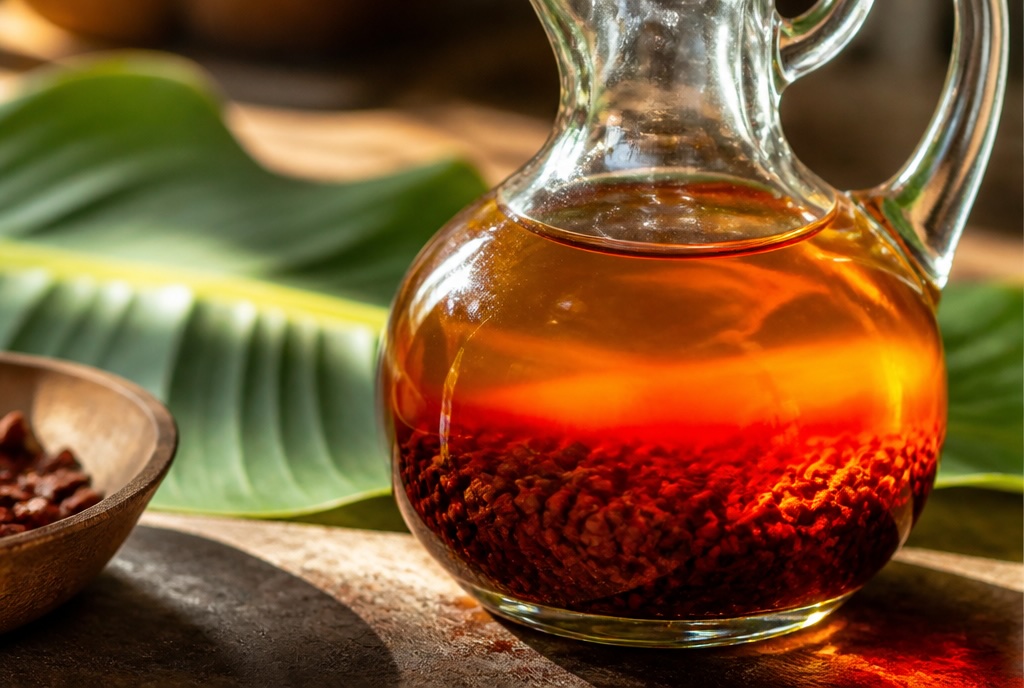
Is sunflower oil a seed oil? Yes—it comes from sunflower seeds. However, not every sunflower oil has the same fat profile. Here’s why we use the high-oleic variety in our annatto oil, and how to cook with it.
Yes — Domestic Gourmet Organic Annatto Oil is made with a seed oil. Organic high-oleic sunflower oil, to be exact. We chose it on purpose because its neutral flavor lets achiote lead.
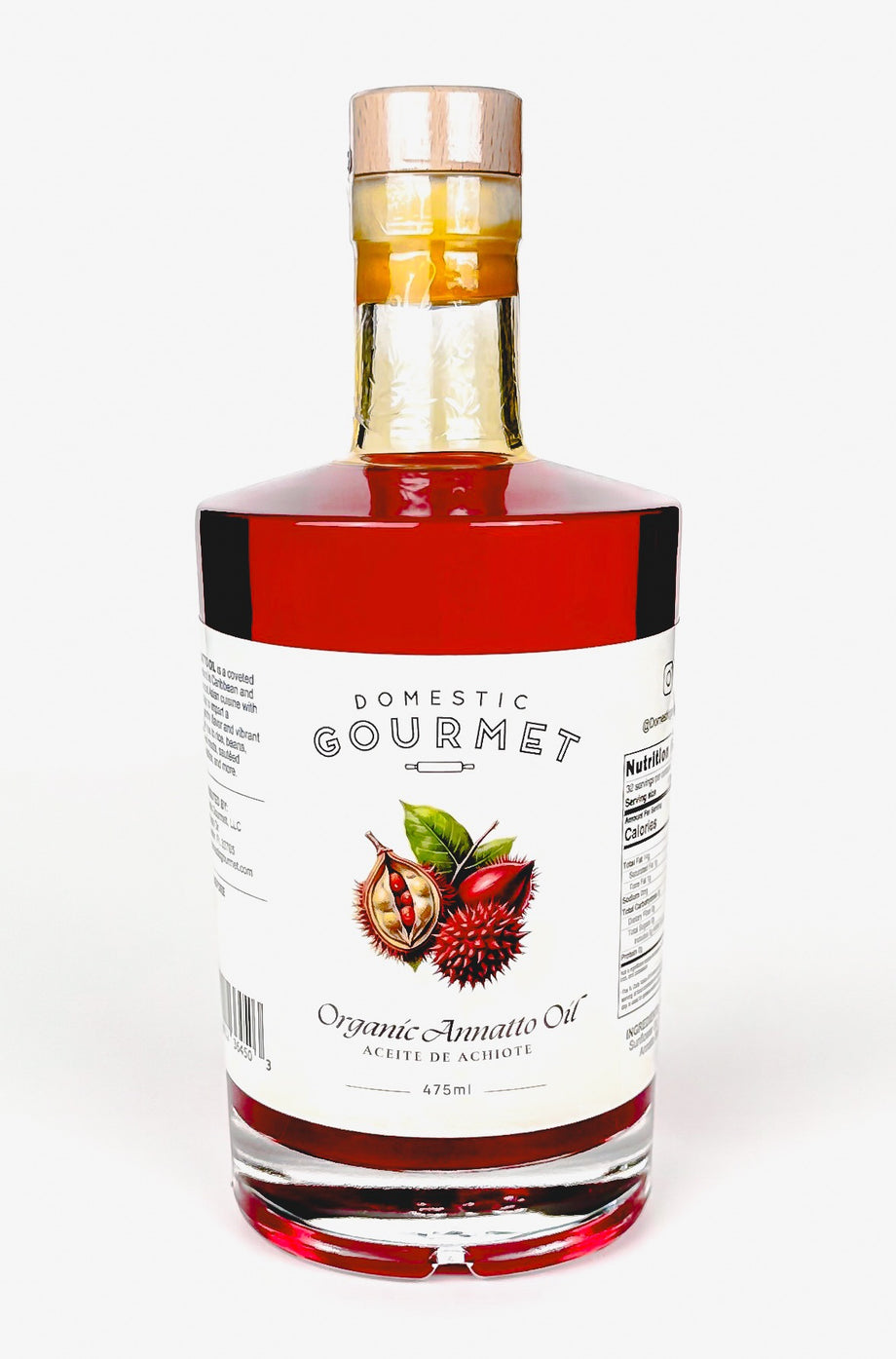
Two ingredients. That’s the whole bottle: organic high-oleic sunflower oil and organic annatto (achiote) seeds, steeped until the oil carries the seed’s color and earthy warmth. When your ingredient list is two items long, there’s nowhere to hide — so let’s talk about both of them honestly.
From our kitchen to yours
Curious how it tastes? Start with one bottle.
Warm color and earthy achiote flavor for rice, beans and sofrito. Ready to use, without infusing and straining seeds yourself.
12 fl oz · just two organic ingredients
$29.95
Why annatto needs a carrier oil
Bixin, the pigment that makes annatto red-orange, is fat-soluble. Because it does not dissolve in water, fat carries it into the dish. For centuries, cooks across Puerto Rico, Cuba, Latin America, and Asia have coaxed that color out of the seed the same way: by warming the seeds in fat and letting the fat carry the color and flavor into the food. Although older kitchens often used lard, in ours we use oil.
The question was: which oil carries achiote best, without getting in its way?
An annatto oil has three jobs:
- Carry the color evenly into rice, sofrito, beans, and masa.
- Stay out of the flavor’s way. Although its color is red, achiote is earthy and warm rather than spicy. A loud carrier oil, like a grassy, peppery extra-virgin olive oil, for example, competes with it and changes the dish.
- Hold up when you bloom it. Annatto oil goes into a hot caldero first, before anything else. So the carrier has to work at sofrito temperatures without smoking.
That is why we chose high-oleic sunflower oil: it does all three.
What will you cook with your first bottle?
For example, you don’t need a complicated recipe to start. Use annatto oil wherever your recipe calls for another cooking oil, using the recipe’s oil quantity.
- Make a flavorful base: try my garden-fresh Puerto Rican sofrito.
- Plan a quick weeknight dinner: cook Puerto Rican picadillo in 20 minutes and serve it with your favorite side.
- Cook for a gathering: use the oil in your favorite arroz con gandules or pasteles recipe.
One 12 fl oz bottle contains 24 tablespoons. However, the number of meals depends on the recipe and batch size.
Ready for your next recipe?
Bring achiote flavor to your kitchen
Organic Annatto Oil · 12 fl oz
$29.95
This decision is personal
I’m a stage IV endometriosis warrior. Ingredients are important for my well-being every single day.
So I didn’t choose this oil randomly. I intentionally chose organic high-oleic sunflower oil for its neutral flavor and its oleic acid, a monounsaturated fat also found in olive oil. Although living with endometriosis makes me mindful about ingredients, that experience is not evidence that this oil treats inflammation. Instead, my promise is about cooking: a carefully chosen carrier that lets achiote lead.
To be clear, because this brand is about transparency: a bottle of annatto oil is not a treatment for endometriosis, and I would never sell you that story. This is simpler and more honest than that. When an ingredient is going into my body first, it has to earn its place. As a mother, I also think carefully about what I’m feeding my family. This one has earned its spot.
Is sunflower oil a seed oil? Regular vs. high-oleic
“Seed oil” is a category, and the oils inside that category aren’t interchangeable. This is where online arguments get sloppy, because science matters more to me than slogans.
Regular sunflower oil contains more linoleic acid, a polyunsaturated omega-6 fat. By comparison, the high-oleic variety contains more monounsaturated fat. Neither name alone tells you everything about the oil or the meal it goes into.
High-oleic sunflower oil is a different oil from different seeds. Unlike regular sunflower oil, the high-oleic variety contains more oleic acid. That is the monounsaturated fat also found in olive oil. As a result, its fat profile differs from conventional sunflower oil.
Because the fat profile differs, the oil behaves differently in the kitchen.
Why choose high-oleic sunflower oil for cooking?
For our annatto oil, three traits matter:
- More stable under heat. A higher share of monounsaturated fat helps the carrier resist oxidation. However, a carrier oil’s smoke point is not a tested heat limit for the finished annatto infusion. Use the heat your recipe calls for and avoid letting the oil smoke.
- Longer shelf life without preservatives — the same stability that helps in the pan helps in the bottle.
- Neutral, clean flavor — the trait olive oil, for all its virtues, doesn’t offer here. The achiote leads; the carrier supports.
How our sunflower oil is made
Pressed, never solvent-extracted. Our organic high-oleic sunflower oil is mechanically pressed. Then we steep organic annatto seeds in it to draw out their color and flavor. We do not use solvents in that process.
So when someone asks, “why a seed oil?”, the honest answer is: we didn’t pick “a seed oil.” We picked a high-oleic oil whose fat profile looks like olive oil’s, whose flavor stays neutral, and that is mechanically pressed. Its seeds happen to be sunflowers.
What does the evidence actually say about seed oils?
We won’t pretend the debate doesn’t exist. Here’s the fair summary:
First, separate a cooking ingredient from claims about an entire diet. Johns Hopkins Bloomberg School of Public Health’s evidence review explains that human studies do not support the claim that seed oils cause inflammation. It also distinguishes seed oils from the highly processed foods that often contain them.
Similarly, the American Heart Association’s cooking-oil guidance recommends liquid plant oils in place of fats high in saturated fat. Sunflower oil is one of its listed options. The overall meal and eating pattern still matter.
However, those findings do not prove that our infused oil prevents disease or treats endometriosis. We make no such promise. Choose it for its color, earthy flavor and convenience in your kitchen.
Sunflower oil vs. olive oil for annatto
We love olive oil. It lives in our kitchen too. However, for aceite de achiote, it loses on the criteria above:
- Flavor competition: a good extra-virgin olive oil brings its own grassy, peppery agenda. That is why we want annatto oil to taste like annatto.
- Tradition: the Puerto Rican and Cuban dishes this oil exists for: arroz con gandules, pasteles, sofrito, arroz con pollo, they were built on a neutral fat. As a result, changing the carrier changes the dish.
- Cost honesty: Let’s be clear about where the money in this bottle actually goes: the organic annatto seeds are the expensive ingredient. It takes a real quantity of seed to pull out this color and flavor, and that’s the one place I will never cut. High-oleic sunflower oil does its job faithfully without stacking a second premium on top of the first. So, like with the sazón, the cost of this bottle goes into the ingredient that makes it annatto oil in the first place.
People ask about coconut oil and lard, too. Both are far higher in saturated fat, both set firm when cool (a problem for a pourable, ready-to-use infused oil), and lard would exclude the many home cooks who keep pork out of their kitchens.
The clear bottle is on purpose, too
I thought about using a dark green bottle. But when I created this brand, I created it with transparency and integrity in mind and for me, seeing is believing.
For example, the clear bottle lets you see that deep red-orange color before you open it.
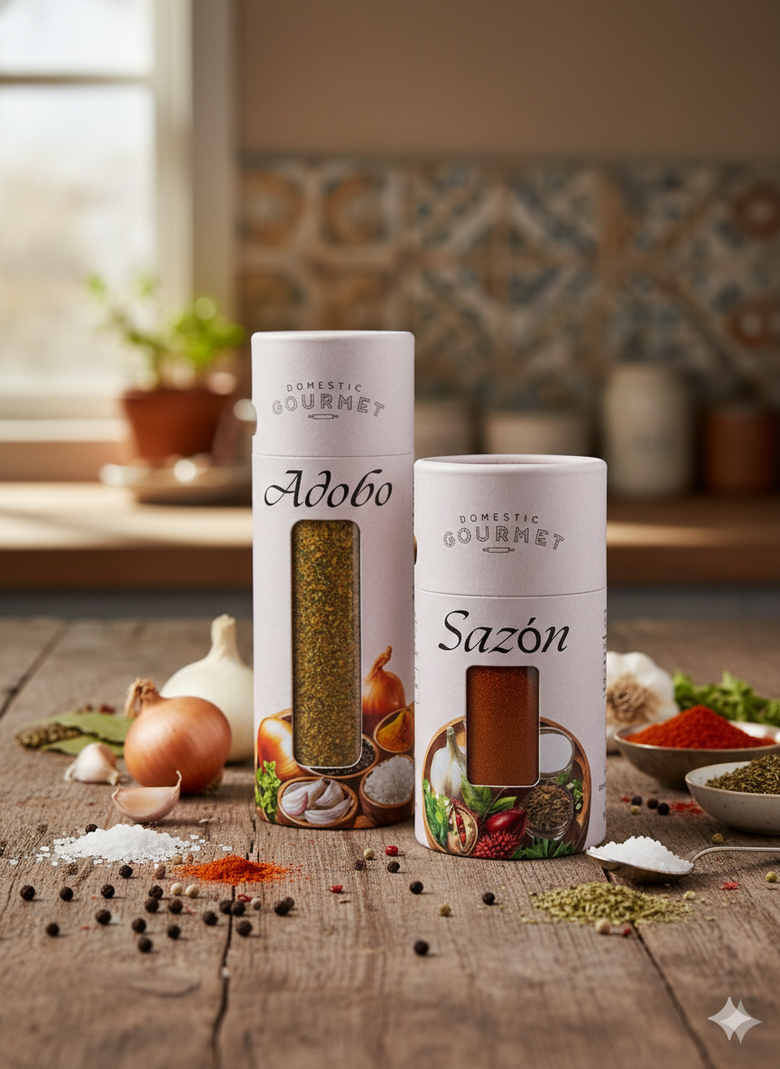
It’s the same reason my spice tubes have a window. In fact, those spice tubes took me over a year to develop. When I say our spices are made from scratch, I want you to see it: the inconsistency in the grind, the freshly dehydrated produce.
What you see is what’s in the bottle… and in the tube.
Sunflower oil and annatto oil: quick answers
Is annatto oil the same as sunflower oil?
No. Sunflower oil is the carrier in our recipe. Annatto oil is the finished infusion: organic high-oleic sunflower oil steeped with organic annatto seeds. As a result, it brings achiote’s red-orange color and earthy flavor to your food.
Is annatto oil spicy?
No—its red-orange color does not mean chili heat. Instead, annatto adds a mild, earthy flavor. Try it in rice, beans or sofrito when you want color without making the dish hot.
Why we use seed oil in annatto oil
We use a seed oil because the right seed oil, organic, high-oleic sunflower, is the best tool for an ancient job: pulling the color and soul out of the achiote seed and delivering it, evenly and faithfully, into your food.
That means two ingredients. No artificial color, no packets, no mystery blend hiding behind the word “vegetable.” If the seed-oil conversation makes you read labels more carefully, good. Read ours. It’s short.
Choose what belongs in your kitchen
New to annatto oil? Start with the bottle. If you want the oil and seasonings together, choose a gift set. Each option takes you to our online shop, where you can review the product, add it to your cart and check out.
$29.95
Start with one bottle
Organic Annatto Oil – Aceite de Achiote
12 fl oz · two organic ingredients. Ready for your next rice, beans or sofrito recipe—no seed infusion or straining needed.
$64.99
Oil + both seasonings
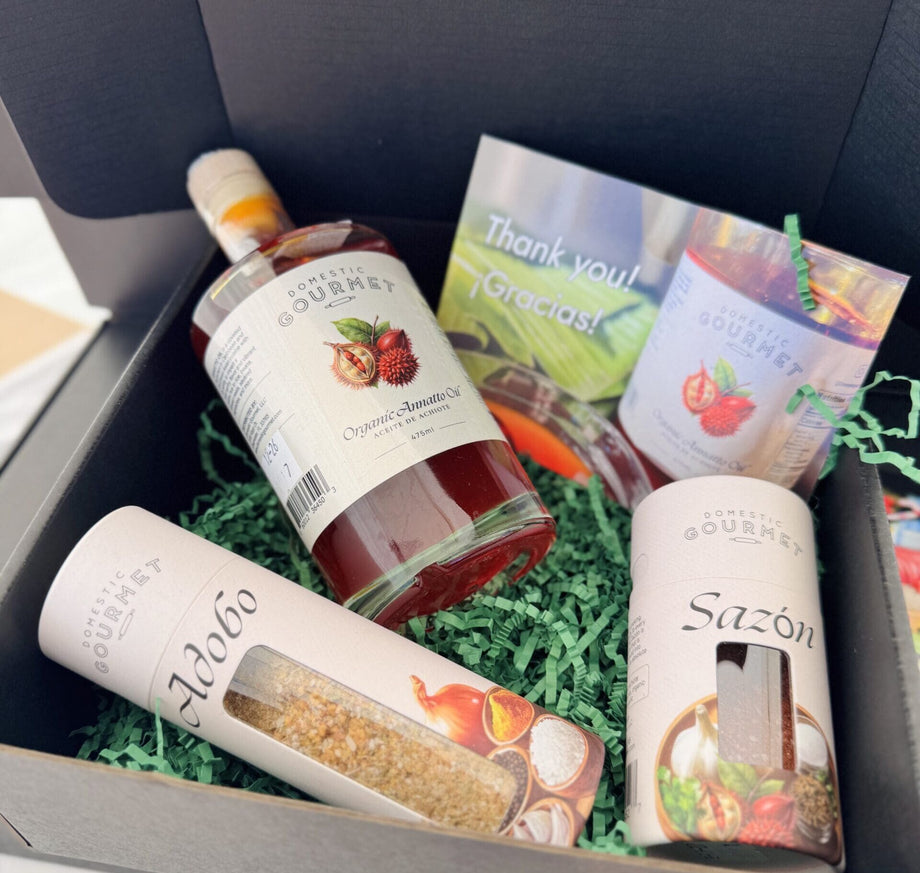
Queen of Nochebuena Box Set
12 fl oz Annatto Oil + 5 oz Adobo + 2 oz Sazón. Stock your pantry or give a cooking gift.
$74.99
For your next batch
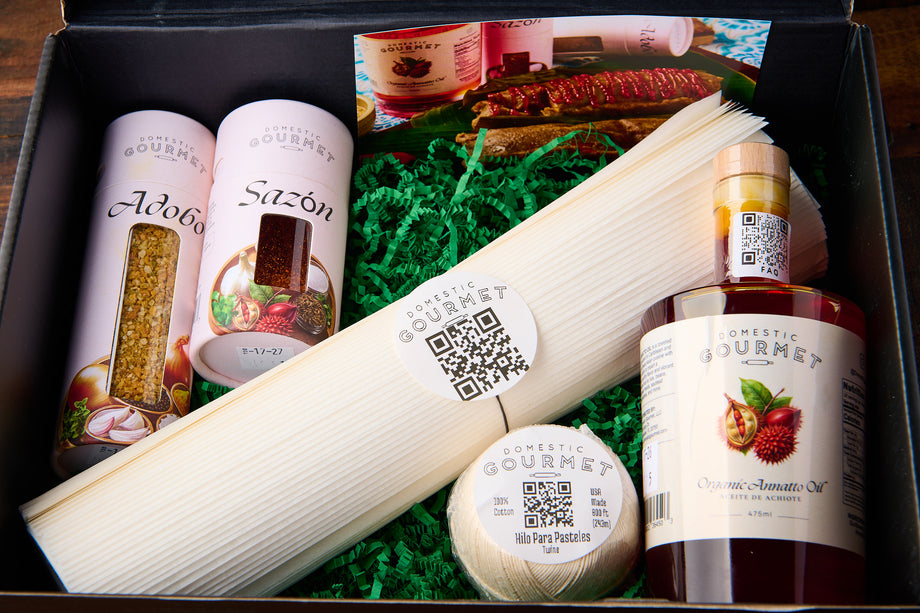
Queen of Nochebuena: Pasteles Edition
Oil, Adobo and Sazón, plus 1 lb of 12 × 18-inch paper and 800 ft of cotton twine. Fresh ingredients and banana leaves are not included; check your recipe’s oil and paper quantities.
$25.00
Already have your oil?
Organic Adobo & Organic Sazón Duo
5 oz Adobo + 2 oz Sazón. Bring both dry seasonings into your pantry. Oil is sold separately.
Still deciding?
Read our annatto oil FAQ for cooking and shopping questions, or ask us a question. Follow the storage instructions and best-by date on your bottle.
Prices shown at the time of writing. Your selected product page shows current pricing and availability; your total is shown at checkout.

